《柳叶刀-妇产科学与女性健康》(The Lancet Obstetrics, Gynaecology, & Women’s Health)近日发表的一项最新研究显示,40岁前进入绝经期的女性患心脏病发作、卒中等严重心血管疾病的风险显著升高。改变生活方式,例如戒烟、保持健康体重、规律运动以及营养膳食,有助于降低相关风险。识别图中二维码或点击文末阅读原文,查阅原文。
该研究分析了来自26个国家超过11.16万名女性的数据,结果发现,与45岁左右进入绝经期的女性相比,早绝经(early menopause,40至44岁绝经)或过早绝经(premature menopause,40岁前绝经)的女性患心血管疾病的风险高出30%至40%。在不同种族群体和收入水平中均存在上述情况,这表明早绝经和过早绝经已成为全球性的健康问题。改变生活方式,例如戒烟、保持健康体重、规律运动以及营养膳食,有助于降低相关风险。
该研究还发现,中低收入国家(LMICs)的女性,尤其是南亚地区的女性,往往比高收入国家的女性更早绝经。特别是印度、孟加拉国、巴基斯坦、南非和坦桑尼亚等南亚及非洲国家的女性,通常在44至46岁绝经,这比高收入国家的平均绝经年龄提前约两年。早绝经可能增加她们晚年患心脏病发作、卒中等严重心血管疾病的风险。作者指出,早绝经女性应被视为心脏病高危人群,需要额外给予医疗关注,包括促进筛查及预防项目的可及性,从而预防或管理潜在的心脏疾病并挽救生命。
文章摘要
早绝经及其与心血管结局的关联(PURE):一项多国前瞻性队列研究
背景
过早绝经是女性特有的心血管疾病风险因素,但目前尚未在不同种族群体或低收入、中等收入及高收入国家中系统性评估过早绝经与心血管疾病之间的关联。本研究旨在估算过早绝经的患病率,并探究其在不同收入水平国家及种族群体中与心血管事件的关联。
方法
这项前瞻性城乡流行病学(PURE)研究是一项多国前瞻性队列研究,对来自28个国家的125,073名35至70岁的女性进行了评估,采用混合Cox比例风险模型,并调整了年龄和INTERHEART风险评分,旨在探究绝经年龄(未绝经、过早绝经[<40岁]、早绝经[40-45岁]及正常年龄绝经[≥45岁])与心血管事件(心肌梗死、卒中或心力衰竭)之间的关联。采用当前状态比例风险模型估算了早绝经的风险。通过社区公告、邮件及电话邀请招募参与者,根据实际情况邀请参与者到中心诊所,以确保样本具有代表性。受过培训的研究人员使用标准化问卷收集数据。
结果
2005年1月5日至2016年12月4日期间,从28个国家招募了111,619名女性(平均年龄50.6岁),并获得绝经相关数据(其中两个国家无绝经相关数据)。在111,619名女性中,有48,249人(占43.2%)来自农村地区,中位随访时间为14.6年(四分位距12.0-16.1)。与高收入国家相比,中低收入国家的女性过早绝经的风险增加了53%(95%CI 46-61%),其中一半女性在47.5岁时就进入绝经期,而高收入国家的女性平均绝经年龄为50.6岁。与欧洲女性相比,南亚女性过早绝经的风险增加了34%(95%CI 27-42%),半数南亚女性在47.4岁时进入绝经期,而欧洲女性为50.7岁。绝经年龄降低与主要心血管疾病事件风险增加显著相关(未绝经组调整后危险比0.90[95%CI 0.83-0.98];早绝经组为1.14[1.05-1.23];过早绝经组为1.27[1.15-1.40]),在调整年龄和INTERHEART风险评分后该关联依然显著,且在心肌梗死和中风上存在类似关联。研究结果在不同种族和国家收入群体中均保持一致。
解释
过早绝经在中低收入国家及南亚女性中更为常见,且在各个收入水平的国家和种族群体中均与心血管事件有关。研究结果表明,应该将过早绝经和早绝经女性作为心血管疾病预防干预的目标人群。END
Declaration of interests
SY is supported by the Marion W Burke endowed chair of the Heart and Stroke Foundation of Ontario. All other authors declare no competing interests.
Acknowledgments
The PURE study is an investigator-initiated study that is funded by the Population Health Research Institute, Hamilton Health Sciences Research Institute, the Canadian Institutes of Health Research, Heart and Stroke Foundation of Ontario, and support from the Canadian Institutes of Health Research's Strategy for Patient Oriented Research through the Ontario Strategy for Patient-Oriented Research Support Unit, in addition to the Ontario Ministry of Health and Long-Term Care and through unrestricted grants from several pharmaceutical companies (with major contributions from AstraZeneca [Canada], Sanofi-Aventis [France and Canada], Boehringer Ingelheim [Germany and Canada], Servier, and GSK), and additional contributions from Novartis and King Pharma, and from various national or local organisations in participating countries. These countries are: Argentina—Fundacion ECLA (Estudios Clínicos Latino America); Bangladesh—Independent University and Bangladesh, and Mitra and Associates; Brazil—Hospital Alemão Oswaldo Cruz; Canada—unrestricted grant from Dairy Farmers of Canada and the National Dairy Council (USA), Public Health Agency of Canada, and Champlain Cardiovascular Disease Prevention Network; Chile—Universidad de La Frontera (DI13-PE11/EXD05–0003); China—National Center for Cardiovascular Diseases and ThinkTank Research Center for Health Development; Colombia—Colciencias (grant numbers 6566–04–18062 and grant 6517–777–58228); India—Indian Council of Medical Research; Malaysia—Ministry of Science, Technology and Innovation of Malaysia (grant number: 100-IRDC/BIOTEK 16/6/21 [13/2007], and 07-05-IFN-BPH 010), Ministry of Higher Education of Malaysia (grant number: 600-RMI/LRGS/5/3 [2/2011]), Universiti Teknologi MARA, Biostatistics & Data Repository Sector, National Institute of Health, Setia Alam for the data linkage service, and National Registration Department for their willingness to share their mortality records for research purposes, and Universiti Kebangsaan Malaysia (UKM-Hejim-Komuniti-15-2010); occupied Palestinian territory—the UN Relief and Works Agency for occupied Palestinian territory Refugees in the Near East, occupied Palestinian territory, and the International Development Research Centre, Canada; Philippines—the Philippine Council for Health Research and Development; Poland—the Polish Ministry of Science and Higher Education (grant number: 290/W-PURE/2008/0) and Wroclaw Medical University; Saudi Arabia—Saudi Heart Association, Dr Mohammad Alfagih Hospital; South Africa—The North-West University, SA and Netherlands Programme for Alternative Development, National Research Foundation, Medical Research Council of South Africa, and Faculty of Community and Health Sciences; Sweden—grants from the Swedish state under an agreement between the Swedish Government and the County Councils Concerning Economic Support of Research and Education of Doctors [ALFGBG-1006439], and the Swedish Heart and Lung Foundation [2024-0678]; Türkiye—Metabolic Syndrome Society; and United Arab Emirates—Sheikh Hamdan Bin Rashid Al Maktoum Award For Medical Sciences and Dubai Health Authority. We wish to acknowledge the PURE project office staff, national coordinators, investigators, and key staff (appendix p 2).
Editorial note: The Lancet Group takes a neutral position with respect to territorial claims in published maps and institutional affiliations.
中文翻译仅供参考,所有内容以英文原文为准。
https://doi.org/10.1016/S3050-5038(26)00053-1
推荐阅读
柳叶刀 | 更年期是一个发展的人生阶段,而非预示着衰退期的开始
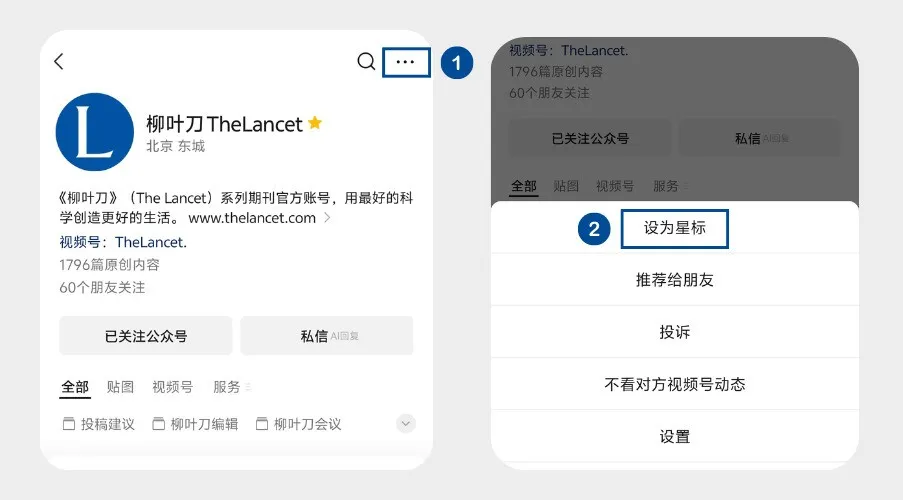
关注柳叶刀服务号,探索更多科研服务!
